Antique & Vintage Wedding Dresses
Heirlooms,
gently restored.
From a grandmother's 1950s satin to a lace gown rediscovered in the loft, we hand-clean, repair and preserve antique wedding dresses with the patience their age deserves.
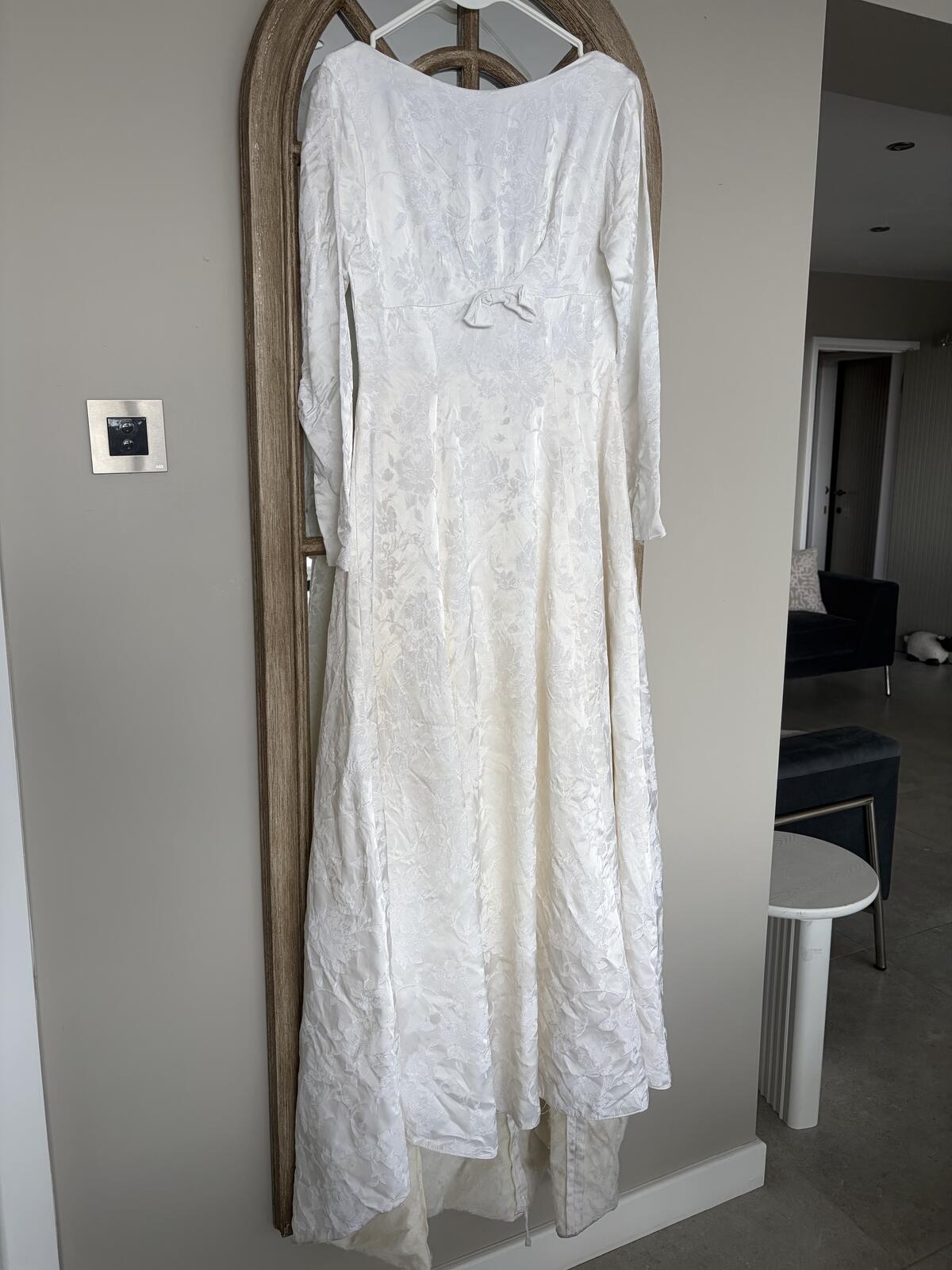
A dress that has waited decades in a wardrobe deserves more than a standard clean. Every antique gown we receive is treated as an heirloom first and a garment second.
Before & After
Decades of grime, lifted by hand
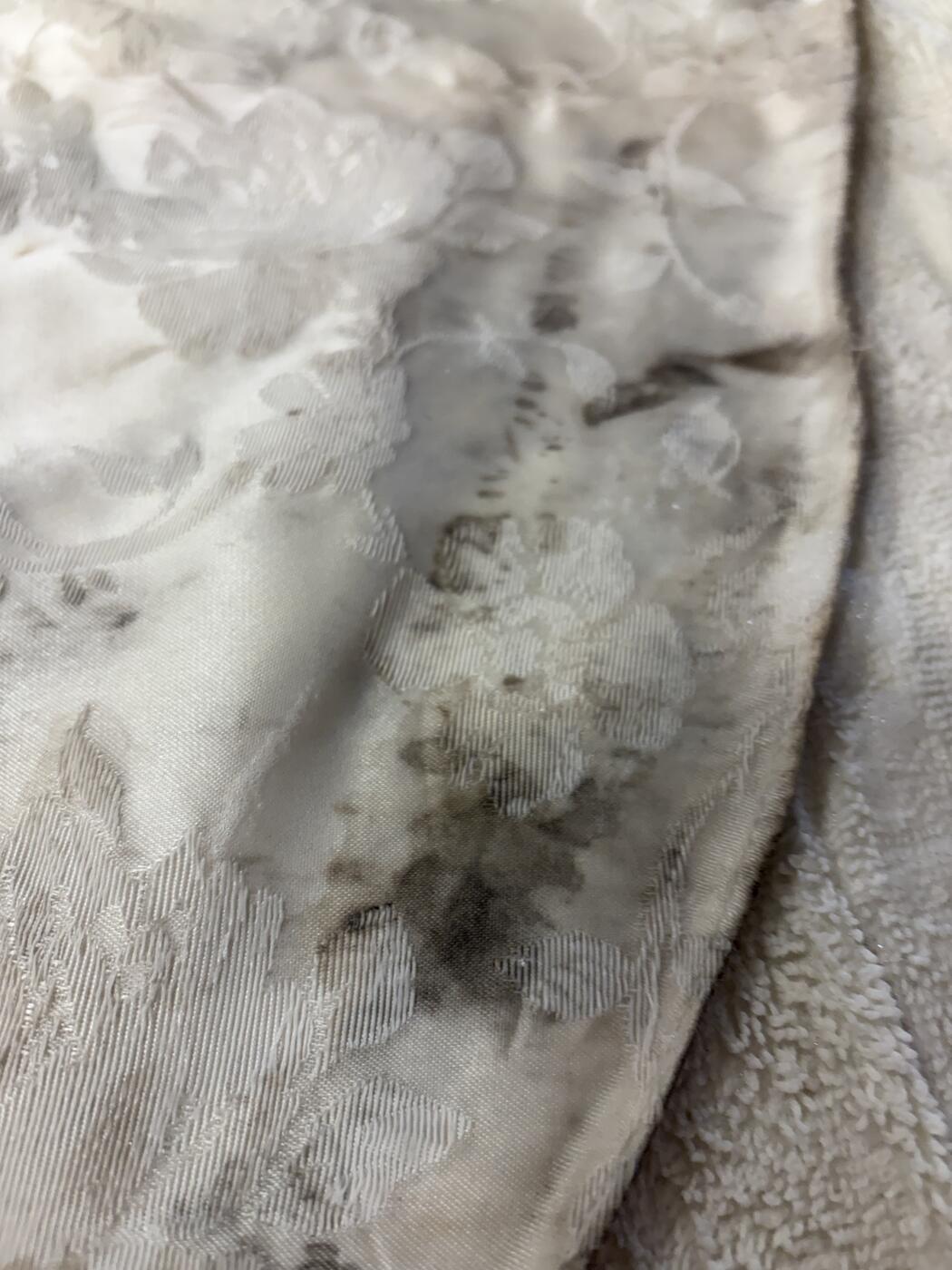
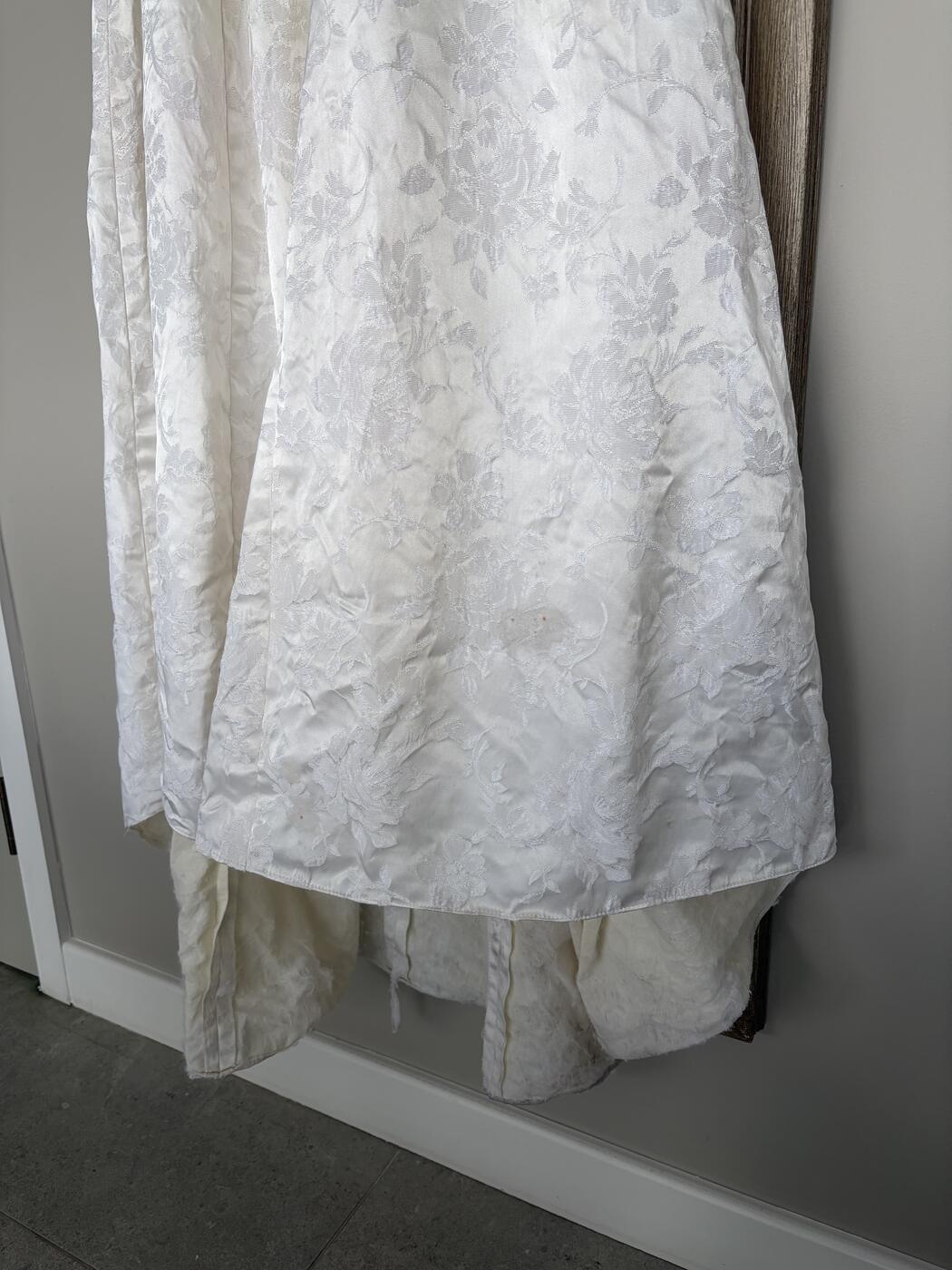
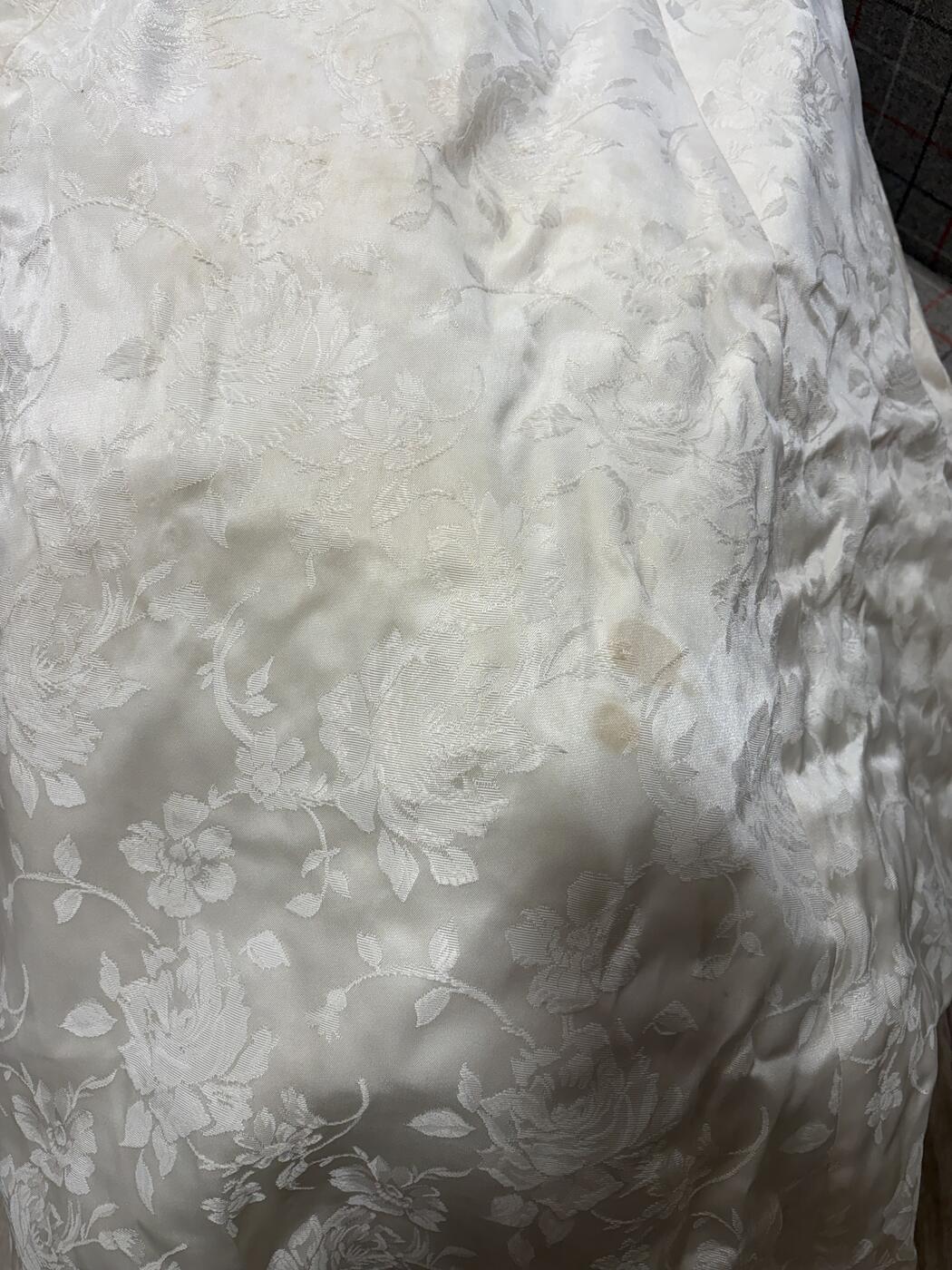
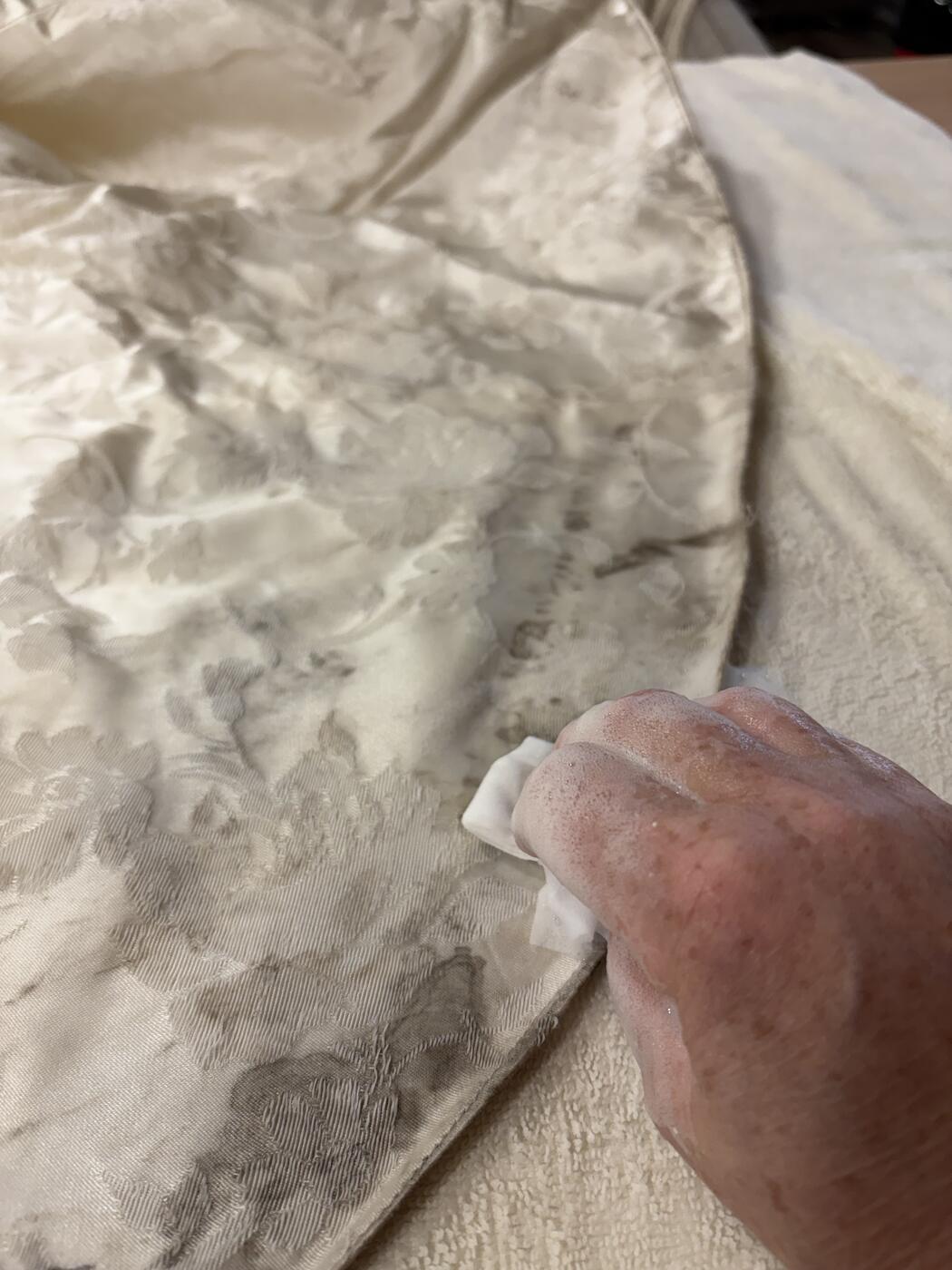
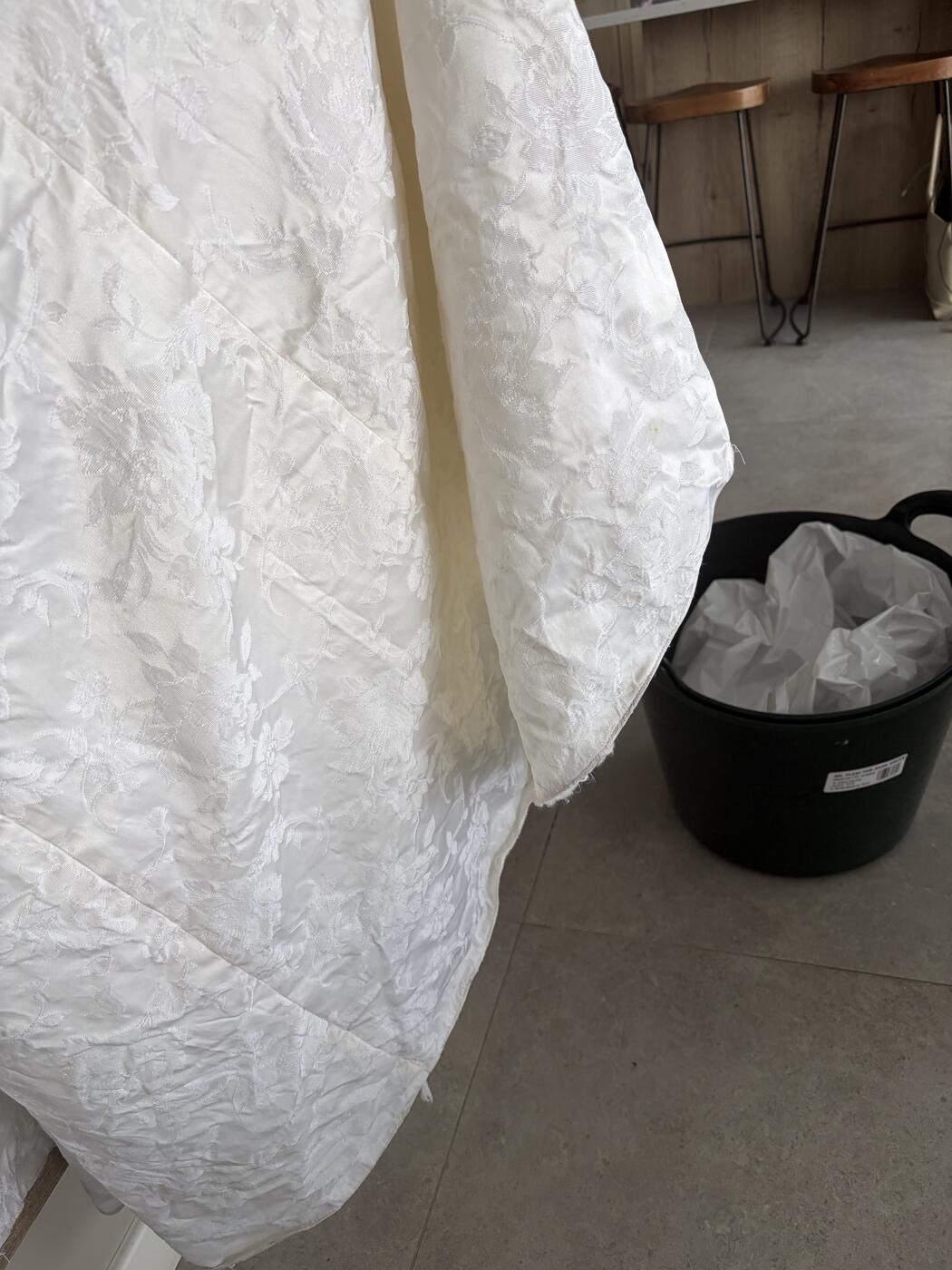
This floral jacquard gown came to us with years of ingrained grime along the hem and age spots across the skirt. Working slowly, section by section, the pattern and the fabric's original sheen came back.
Drag the slider to see the transformation
From the Restoration Journal
One gown, start to finish
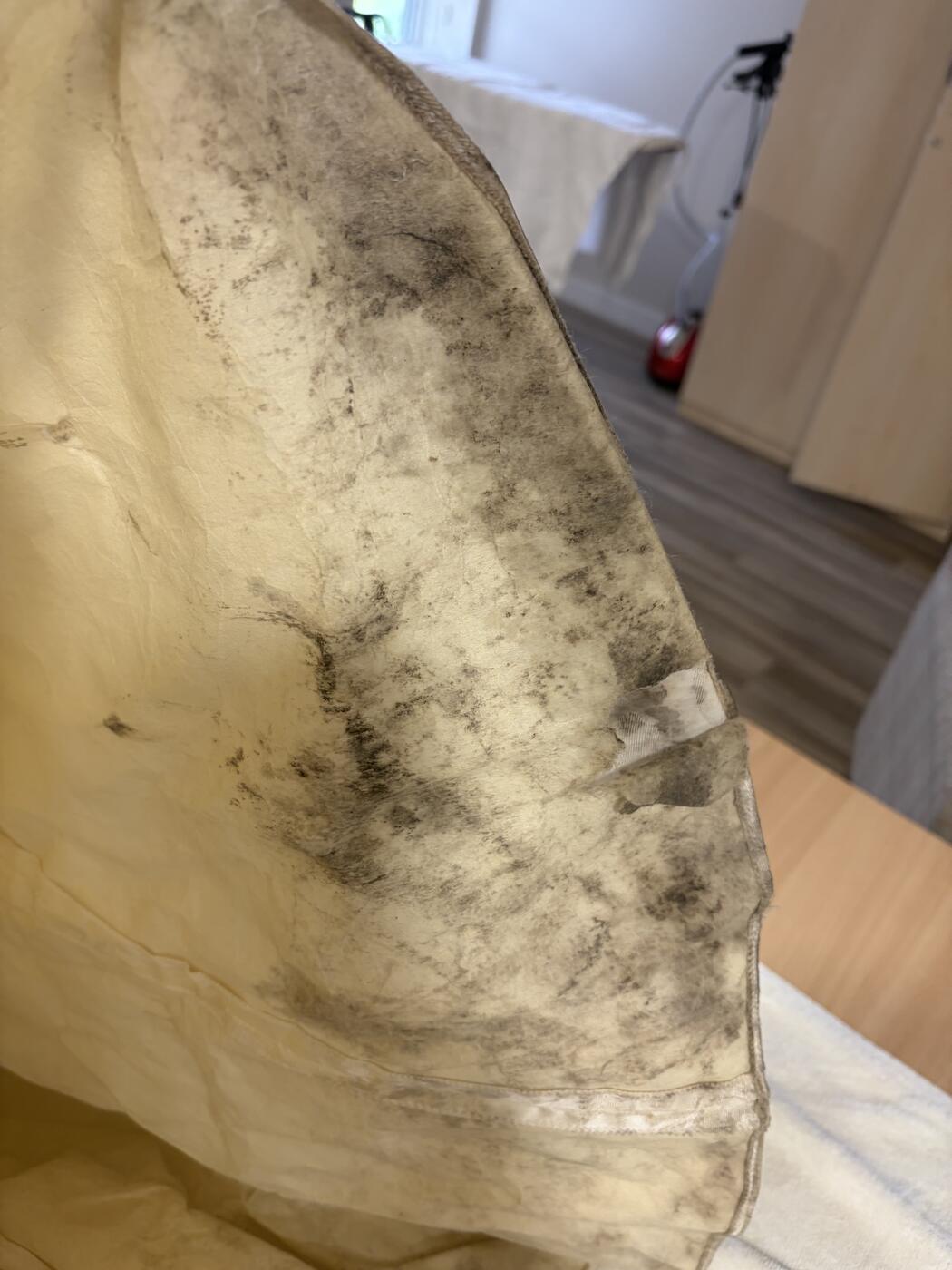
Every antique dress is photographed and documented at each stage of its restoration. Here's a real one, from the condition it arrived in to the day it went home.
What Time Does to a Gown
The marks of age we treat
Yellowing & Oxidation
Light, air and acidic storage slowly turn white fabrics cream, then yellow. We carefully lift discolouration to bring back as much of the original tone as the fibres safely allow.
Age Spots & Hidden Stains
Champagne, sugar and perspiration are invisible on the day but caramelise into brown spots over the years. We treat each one individually by hand.
Mould & Mildew
Lofts, garages and damp wardrobes are the enemy of old dresses. We gently treat mildew staining and the musty odour that comes with it.
Rust Marks
Metal pins, hooks, zips and wire hangers leave orange-brown rust stains over time. These need a specialist approach, as the wrong product can burn straight through old fabric.
Fragile & Weakened Fabric
Older silks can become brittle or split along folds, and heavy beadwork can drag on tired seams. We assess the strength of the fabric before anything touches it.
Set-In Creases
Dresses folded the same way for decades develop deep creases that can weaken the fibres. We relax them gently with low, careful steaming.
A Conservation-Minded Approach
How We Restore an Heirloom
Examine
We inspect every seam, button and bead, and photograph the gown's condition on arrival.
Test
Fabric and dye are tested on a hidden area first, so we know exactly what the dress can tolerate.
Hand-Clean
Stains are treated by hand with gentle, fabric-appropriate methods, one small section at a time.
Restore
Loose seams, lifting lace and missing buttons or beads are carefully secured and repaired.
Preserve
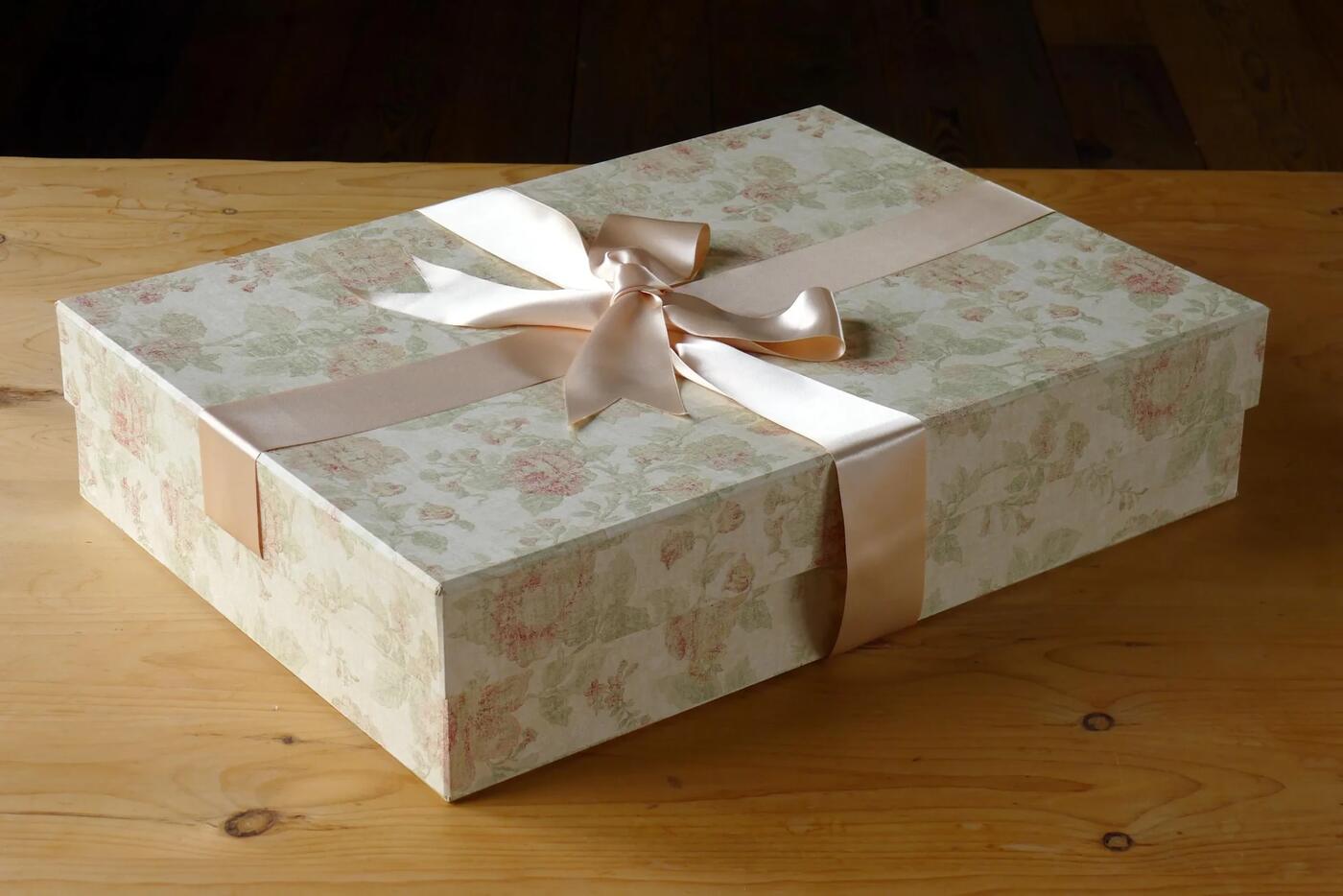
The gown is folded with acid-free tissue and laid in an archival box, ready for the next generation.
Beyond Cleaning
Restoration & Repairs
Seams & Stitching
Weakened or split seams are re-secured by hand with fine thread chosen to match, so the repair sits quietly within the original work.
Lace & Tulle Mending
Small tears and lifting appliqué in lace, net and tulle are carefully stabilised to stop them spreading any further.
Buttons, Beads & Sequins
Loose embellishment is re-secured, and missing buttons or beads can be matched as closely as possible to the originals.
Something Old, Worn Again
Planning to wear a mother's or grandmother's dress on your own day? We'll clean and refresh it so it's ready to walk down the aisle once more.
A Century of Bridal Fashion
Every era needs its own care
Fabrics, dyes and construction have changed enormously over the last hundred years. Knowing when your dress was made tells us how it will behave.
-
Pre-1920
Victorian & Edwardian
Silk taffeta, cotton lawn and handmade lace. Some silks were "weighted" with metal salts and can split at the lightest touch.
-
1920s–30s
Jazz Age
Silk crêpe and bias-cut satin, often heavily beaded. The weight of the beadwork can drag on fragile fabric.
-
1940s
Wartime
Rayon, borrowed gowns and even parachute silk. Rayon can shrink or distort if it gets wet, so it needs a gentle hand.
-
1950s–60s
Mid-Century
Full satin skirts, jacquard and nylon net. Early synthetics are especially prone to yellowing.
-
1970s–80s
Modern Vintage
Polyester, broderie anglaise and dramatic sleeves. Old adhesives and interfacings can discolour from the inside out.
Heirloom Preservation Boxing
Kept safe for the next hundred years
Once your antique dress is clean, the way it's stored decides how long it lasts. We finish every restoration with archival boxing, so the good work doesn't come undone.
A Note on Honesty
Some marks are part of the story
Old fabric is unpredictable, and not every stain from fifty years ago will come out completely. Before we begin, we'll tell you honestly what we expect to achieve. If a dress is too fragile to clean safely, we'll advise you on the best way to preserve it as it is.
dresscleaning.co.ukAntique Dress Questions
Frequently Asked Questions
There's no minimum age. We regularly care for dresses from the 1970s and 80s as well as much older Victorian and Edwardian gowns. If a dress has been stored for many years, or it was a mother's or grandmother's, this is the right service for it.
In many cases we can lift yellowing significantly. How far depends on the fabric, the cause and how long it has been setting in. We always test first and give you an honest idea of the likely result before we start.
Every antique dress is cleaned by hand, never in a machine, using gentle methods matched to the fabric. If a gown is too delicate to clean safely, we'll tell you and recommend preservation boxing on its own so it doesn't deteriorate any further.
Yes. We'll clean, refresh and repair it so it's ready for your wedding day. Please get in touch as early as you can, because older dresses can need extra time.
Wrap the dress loosely in a clean white cotton sheet or acid-free tissue. Please avoid plastic bags, which trap moisture. Then send it with a tracked and insured courier. We're happy to talk you through packaging before you post it.
Because every heirloom is different, antique dresses are priced individually. Send us a few photos through our contact form, including close-ups of any stains or damage, and we'll give you a clear, no-obligation quote.
Keep the dress boxed somewhere cool, dark and dry with a steady temperature, such as under a bed or on a wardrobe shelf. Avoid lofts, garages and cellars. Don't hang heavy gowns long-term, and never store them in dry-cleaning plastic.